
Building a beautiful custom pool is one thing. Maintaining it so it stays beautiful and functional for decades is another. Arizona’s climate presents specific challenges: intense summer heat, mineral-heavy water, and UV exposure that’s among the strongest in the nation. Understanding how to properly maintain your pool means the difference between a cherished feature that lasts 30 years and a declining asset that becomes a burden.
This guide covers everything you need to know about maintaining a residential pool in Arizona, whether you manage maintenance yourself or hire a professional service.
Arizona tap water typically has 200-300+ ppm calcium hardness. Ideal pool calcium is 200-400 ppm, so you're starting high. As water evaporates during Arizona's hot months, calcium concentrates further. Excess calcium can cause:
• Cloudy water
• Equipment scaling
• Reduced chemical effectiveness
• Deposits on pool surfaces
All the minerals in Arizona water accumulate in your pool. Over time, TDS rises, and the only solution is partial water replacement or draining and refilling.
The natural alkalinity in Arizona water can affect pH buffering capacity. Proper alkalinity helps stabilize pH.
This measures whether your water will corrode equipment or precipitate minerals. In Arizona's heat and hard water, managing saturation index is critical for equipment longevity.

• Check for leaks weekly
• Listen for unusual noises (bearings wearing out)
• Keep pump area clear of debris
• Run minimum 8 hours daily (more during summer)
• Monitor for cavitation (sucking sounds) which indicates low water level
• Clean regularly when pressure rises (see weekly maintenance)
• Check for lateral cracks (sand filter) or cartridge tears (cartridge filter)
• Replace laterals or cartridges when they're damaged
• Backwash only when pressure requires it (excessive backwashing wastes water)
• Even Arizona pools benefit from heating for evening use and cooler months
• Have heater serviced annually before heating season
• Check for any water leaks around connections
• Clean heater filter screen regularly
• If using automatic chlorinator, check for proper feed rate weekly
• Keep skimmer baskets clean so chemicals reach the pool
• Test chemical levels 2-3 times weekly
• Replace cyanuric acid (stabilizer) as needed—Arizona sun burns through it faster than other regions
• Check controller monthly for proper function
• Keep systems dry and protected from sun exposure when possible
• Replace batteries in wireless systems annually
• Program seasonal adjustments (run times vary by season)
Measures acidity/alkalinity. Ideal is 7.2-7.6. Affects chemical effectiveness, equipment lifespan, and comfort.
Kills bacteria and algae. Maintain 2-4 ppm
Alkaline substances that stabilize pH. Maintain 80-120 ppm
Dissolved minerals. Maintain 200-400 ppm
Protects chlorine from sun. Maintain 30-50 ppm
Arizona’s hard water eventually concentrates enough that a full drain and refill becomes necessary. This typically happens:
Draining and refilling is expensive (can cost $3,000-$8,000 depending on pool size) but sometimes necessary to reset water chemistry completely.
Before draining, discuss with a professional whether it’s actually necessary or if alternative treatments (reverse osmosis, saturation index adjustment) might work better.
10-15 years
10-15 years (cartridges replaced every 1-2 years)
10-15 years
5-10 years
10+ years
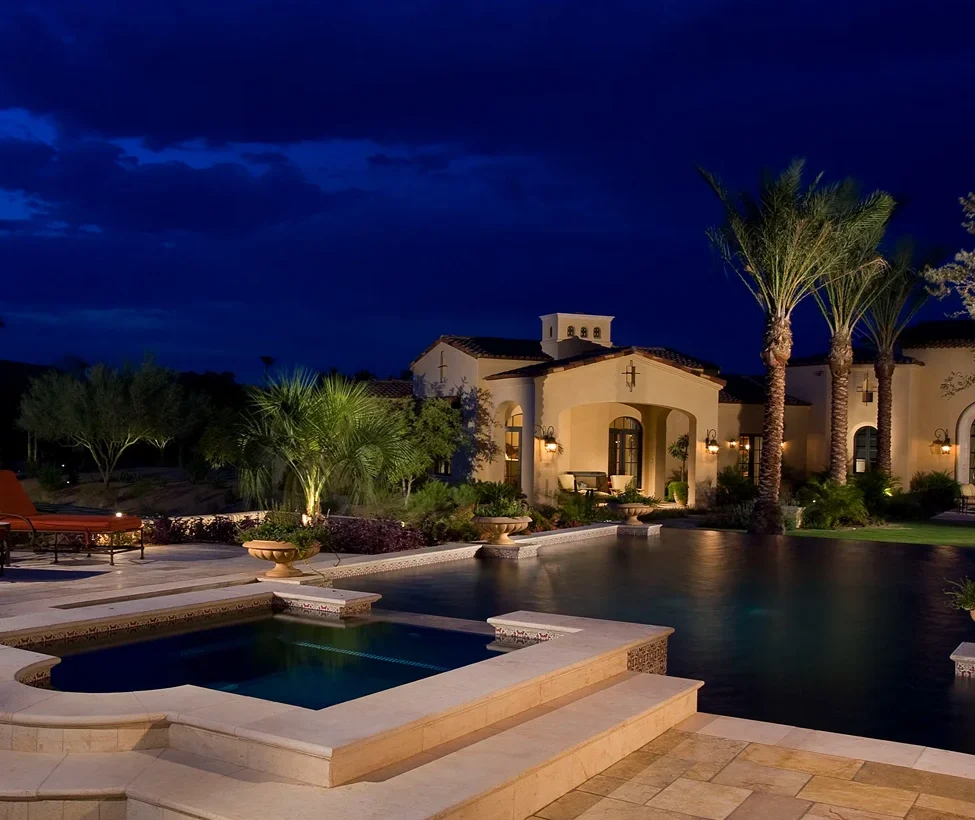
All Mossman Brothers pools include warranty coverage for structural integrity and workmanship. For specific warranty details and what maintenance is required to maintain warranty validity, refer to your warranty documentation.
We’re available to answer technical maintenance questions and can recommend reliable maintenance professionals if you prefer outsourced care.
WhatsApp us