
Table of Contents
- The Short Answer
- What Is a Concrete (Gunite) Pool?
- What Is a Fiberglass Pool?
- Cost Comparison: Upfront and Over 10 Years
- Maintenance: What You’re Actually Signing Up For
- Lifespan and Long-Term Durability
- Design Flexibility: Why Shape Matters
- How Arizona’s Climate Affects Your Decision
- The Case for Concrete in the Phoenix Metro
- When Fiberglass Might Be Worth Considering
- Questions to Ask Any Pool Builder
- Frequently Asked Questions
The Short Answer
If you are building a custom pool in Scottsdale, Phoenix, or the surrounding metro, concrete (gunite) is almost always the right choice. Fiberglass pools cost less upfront and require less weekly maintenance, but they come in fixed shapes, max out around 16 feet wide, and have a structural lifespan roughly half that of a well-built concrete pool. Concrete takes longer to build and demands more from your maintenance routine, but it gives you total freedom over size, shape, depth, and finish — and in Arizona’s climate, a quality concrete shell will outlast any fiberglass alternative. If you want something truly custom, there is no comparison.
That said, every homeowner’s situation is different. Below is the most straightforward breakdown we know how to write, drawn from 33 years of building custom pools across the Phoenix metro.
What Is a Concrete (Gunite) Pool?
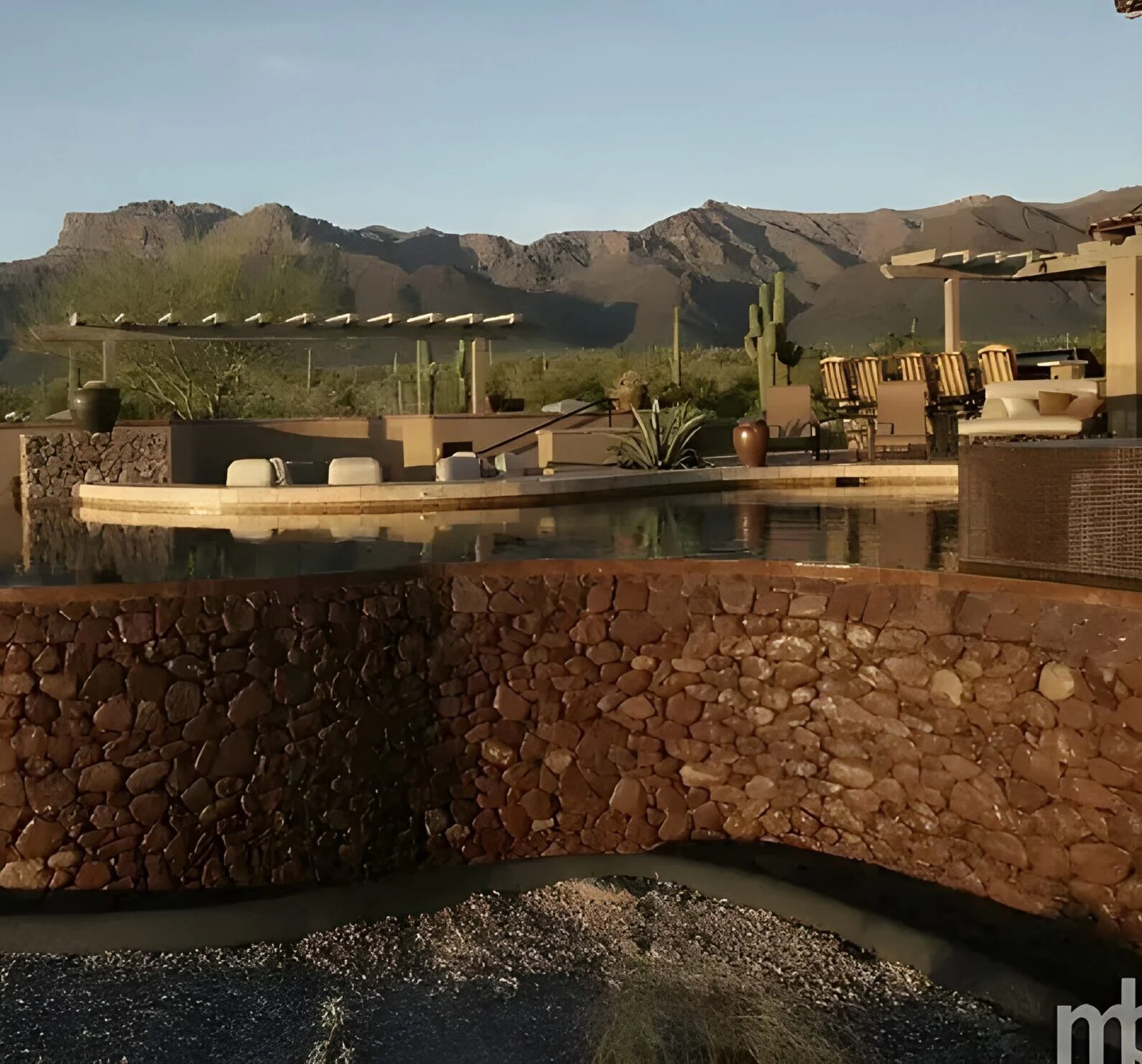
Concrete pools — built using a process called gunite or shotcrete — are constructed on-site, sprayed over a steel reinforcement framework, and shaped entirely to your specifications before being finished with plaster, aggregate, quartz, or pebble materials.
Gunite is a dry-mix concrete pneumatically applied at high pressure. Shotcrete uses a wet-mix delivered the same way. Both methods produce an extraordinarily strong shell. The terms are often used interchangeably, and the distinction matters less than the skill of the crew applying it. Most high-end Arizona pool builders, including Mossman Pools, use gunite.
The concrete shell itself is permanent. What you resurface over the life of the pool is the interior finish — plaster, aggregate, or pebble — which typically needs attention every 10 to 15 years depending on water chemistry and care. The structure underneath can last 50 to 100 years.
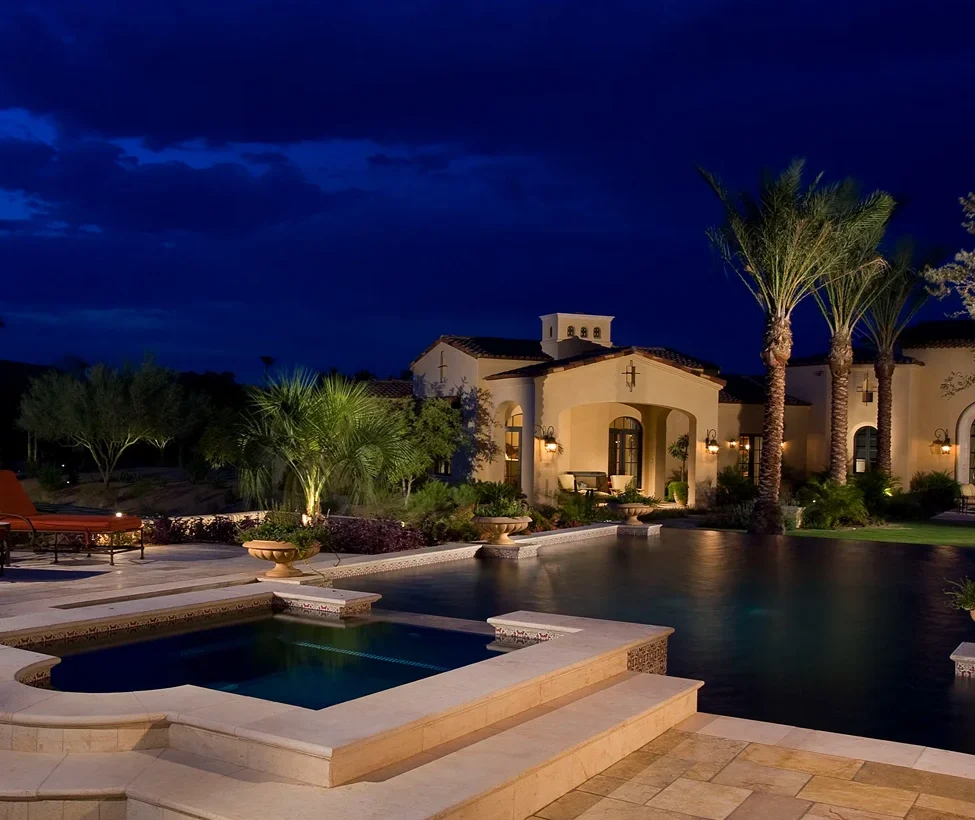
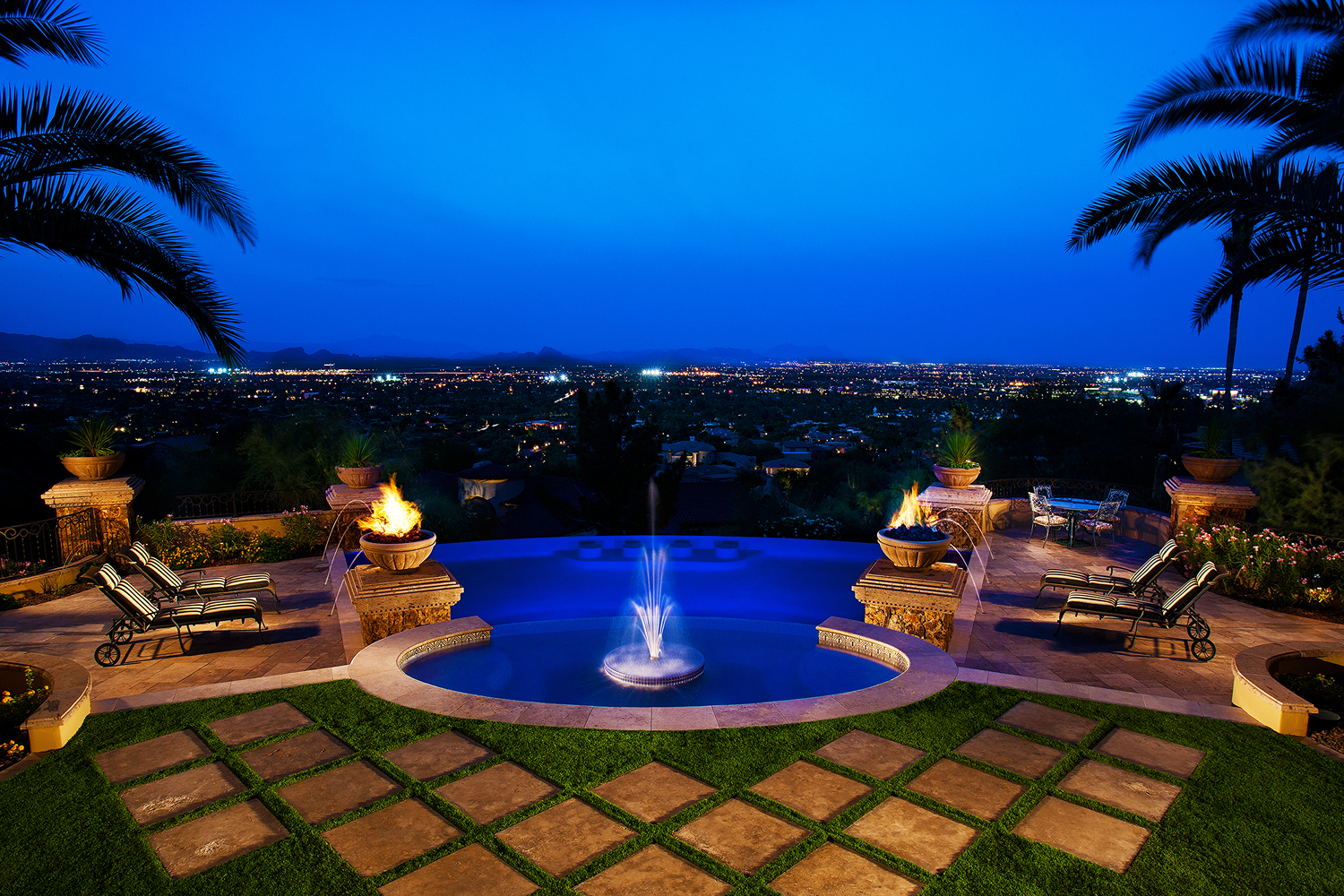
Concrete pools account for the majority of high-end custom pool installations in the Phoenix metro. When you see a pool with an irregular shape, a beach entry, an infinity edge, a raised spa, or a grotto — it’s almost certainly gunite.
What Is a Fiberglass Pool?
Fiberglass pools are manufactured offsite in a factory, then transported to your property as a single pre-formed shell and lowered into an excavated hole by crane. Installation takes 2 to 4 weeks from excavation to water.
The shell’s smooth gel coat surface is one of fiberglass’s genuine advantages: it resists algae better than concrete, requires fewer chemicals, and demands less scrubbing. On a weekly maintenance basis, fiberglass pools are genuinely easier to care for.
The tradeoff is shape. Fiberglass pools are only available in the manufacturer’s catalog of pre-engineered molds. Width is almost always capped at 16 feet. Length tops out around 40 feet for most manufacturers. You can pick from dozens of shapes, but you can’t change them — no angled walls, no custom shelf placement, no irregular perimeters. What you see in the catalog is what you get.
Fiberglass pools work well for straightforward rectangular or freeform installs where the priority is lower ongoing maintenance and a faster build timeline. They’re less common in the luxury custom market for a reason.
Cost Comparison: Upfront and Over 10 Years
The honest answer on cost is that concrete costs more upfront, and fiberglass costs more over time if you’re doing the math on maintenance. Here’s how it breaks down:
Upfront Installation Cost
Fiberglass pools typically run in the range of $45,000–$85,000 installed, depending on the shell size and site conditions. Concrete pools typically start around $60,000–$110,000 for a straightforward build and climb significantly for custom shapes, features, and finishes.
The price difference at the time of installation is real. Concrete is generally 20 to 25 percent more expensive than a comparable fiberglass pool, though “comparable” is hard to define when the design flexibility is this different.
If you are adding features — a raised spa, a baja shelf, an infinity edge, an outdoor kitchen integration — the comparison shifts. Fiberglass doesn’t accommodate most of those features at all, so there’s no meaningful apples-to-apples.
Note: Mossman Pools does not publish pricing online, because every project is different. For a realistic estimate on your specific property, the right step is a design consultation. Schedule yours here.
Long-Term Maintenance Costs
This is where fiberglass wins on paper. Industry estimates put the 10-year maintenance cost of a gunite pool around $20,000, versus roughly $5,750 for a fiberglass pool over the same period. The difference comes from chemical usage (concrete’s porous surface requires more), more frequent brushing, and periodic resurfacing.
That said, a concrete pool’s maintenance cost is predictable and manageable. Many Scottsdale and Phoenix homeowners hire pool service companies — which changes the equation from time to dollars. And a properly built concrete pool that’s resurfaced on schedule holds its value better than an aging fiberglass shell.
Want to Know What Your Project Would Actually Cost?
Every Mossman Pools project starts with a design consultation — no commitment, just a real conversation about what you’re imagining and what it takes to build it right.
Maintenance: What You’re Actually Signing Up For
Concrete Pool Maintenance
Concrete pools require active weekly maintenance. The porous surface of plaster or aggregate can harbor algae spores, which means you’ll need to brush the walls and floor two to three times per week, not just occasionally. Water chemistry also needs more attention — concrete’s surface slowly leaches calcium and affects pH, which means more frequent testing and chemical balancing.
In Arizona specifically, the heat accelerates chemical consumption. Water temperature above 84°F (common from May through September) increases algae growth risk and depletes sanitizer faster. A neglected concrete pool in a Phoenix summer can turn green in days.
None of this is unmanageable, but it’s a real commitment. Most concrete pool owners in the Phoenix metro use a weekly pool service — typically $80 to $150 per month — which handles brushing, chemical balancing, and equipment checks.
Fiberglass Pool Maintenance
The smooth gel coat surface of a fiberglass pool genuinely does resist algae better. Industry benchmarks put weekly maintenance at 1 to 2 hours versus 3 to 5 hours for concrete. Chemical consumption is lower. Brushing frequency is reduced.
The maintenance advantage is real. If low weekly involvement is your top priority and a catalog shape meets your needs, fiberglass has a legitimate case.
Resurfacing
This is the maintenance item most homeowners don’t fully factor in at purchase time. Concrete pools need to be resurfaced every 10 to 15 years on average — longer with exceptional care, sooner with aggressive water chemistry or heavy use. Resurfacing a concrete pool in the Phoenix metro typically runs $8,000 to $18,000 depending on size and the finish selected.
Fiberglass shells don’t need interior resurfacing in the traditional sense, but the gel coat can fade, chalk, or blister over 15 to 20 years. Restoring or recoating fiberglass is possible but not always straightforward, and not all pool contractors handle it.
Lifespan and Long-Term Durability
Concrete: Built to Last Generations
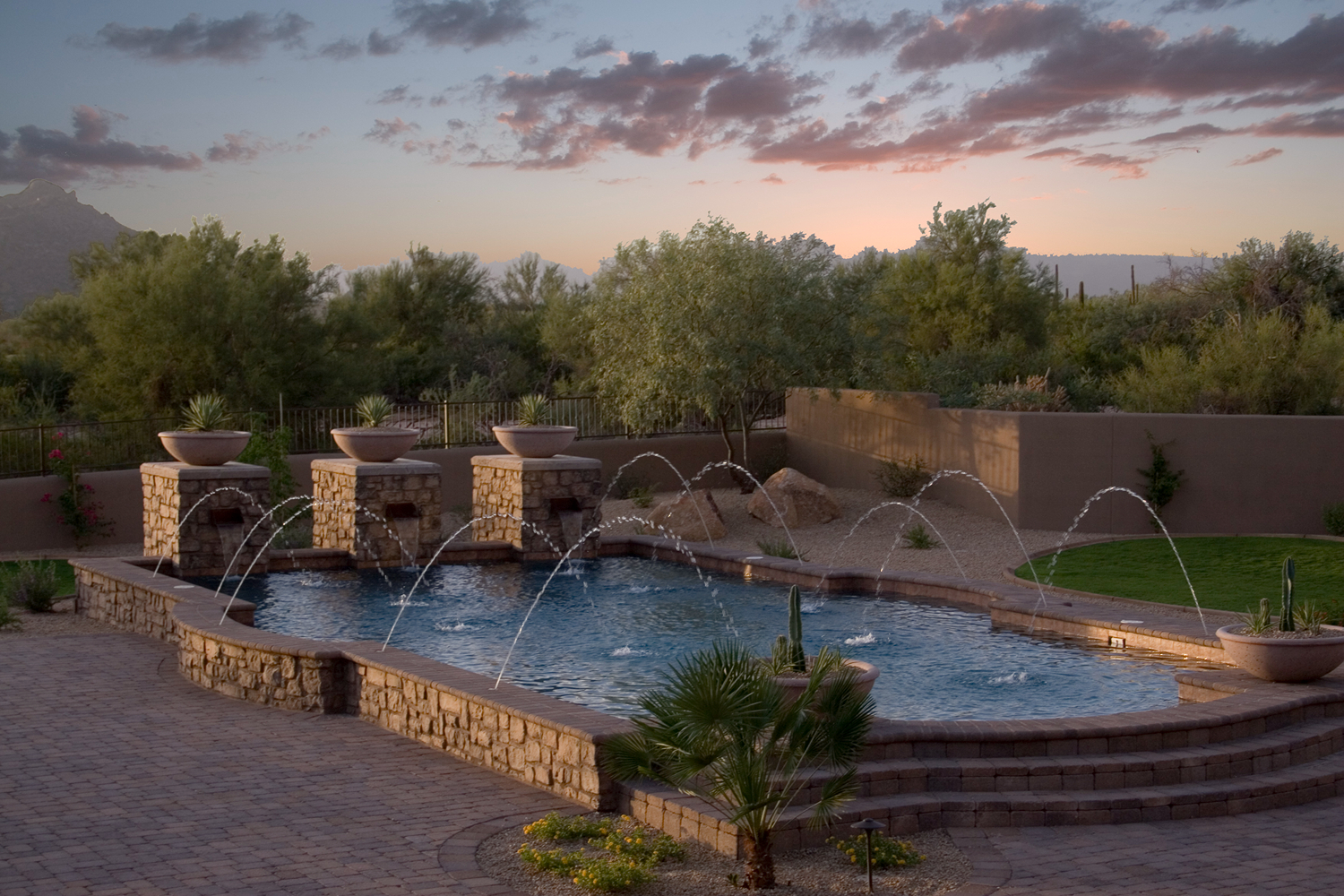
A well-constructed gunite pool has a structural lifespan of 50 to 100 years. The concrete shell does not degrade under normal conditions — it’s essentially a permanent structure in your yard. What changes over time is the interior finish, which you resurface on a 10 to 15 year cycle.
Mossman Pools has built pools that have been in continuous use for more than 30 years without structural issues. The pools built by our founder Robert Mossman in the early days of this company are still standing. That’s the nature of concrete.
This matters in Arizona, where real estate values are tied to outdoor living spaces. A well-maintained concrete pool adds lasting value to a home. Buyers in high-end markets like North Scottsdale, Paradise Valley, and DC Ranch expect concrete.
Fiberglass: Durable, But With Limits
The fiberglass shell itself lasts 25 to 30 years under typical conditions. The gel coat — the smooth finish surface — may fade or degrade cosmetically after 15 to 20 years. This doesn’t affect function, but it affects appearance.
More concerning for Arizona homeowners: Arizona’s hard water and high mineral content can cause scaling on fiberglass surfaces if water chemistry isn’t precisely maintained. This is manageable with a good service routine, but it’s worth knowing going in.
Additionally, fiberglass shells can experience problems with ground movement — hydrostatic pressure, expansive soils, or installation in areas with clay content. Arizona has pockets of expansive soil in the east valley and parts of the north valley, and a qualified engineer should evaluate any site before installation.
Design Flexibility: Why Shape Matters
This is the single biggest reason custom pool buyers in Arizona choose concrete. Fiberglass manufacturers build beautiful pools. But they build them in their shapes, not yours.
With concrete, a skilled design team starts with your property — the slope, the sight lines, the existing architecture, the way the sun tracks across your backyard in July — and designs around it. The pool can wrap around an existing tree. It can follow the contour of a hillside. It can have a different depth at every point, a baja shelf exactly where you want it, an infinity edge oriented to the view you want to frame.
Some features simply don’t exist in fiberglass:
- Infinity edges and vanishing edges — require custom engineering and a catch basin built into the site
- Raised spas — the height differential and plumbing routing demand on-site construction
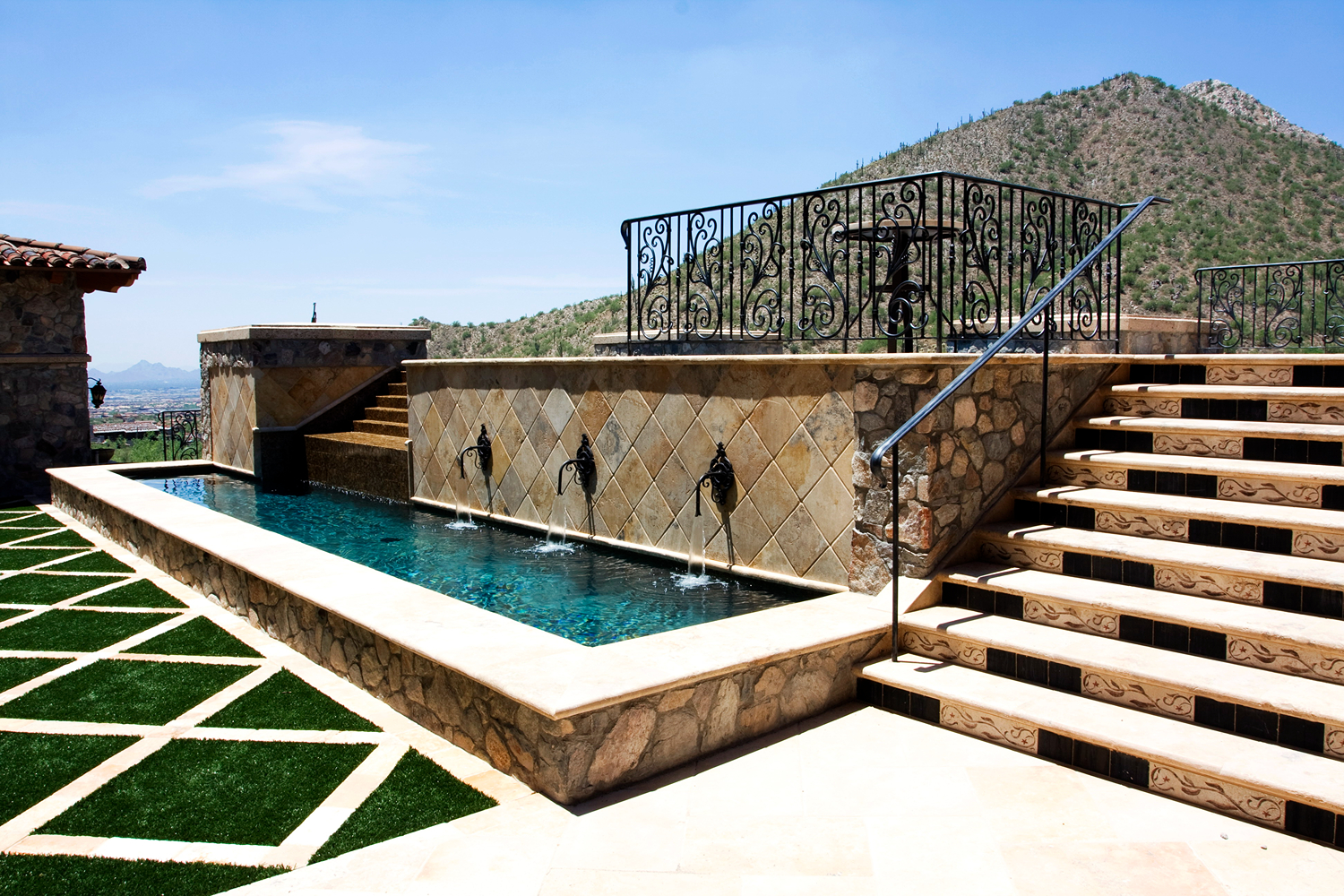
- Grottos and water features — rock formations and built-in waterfalls are poured concrete features
- Irregular perimeters — any non-catalog shape requires concrete
- Beach entries — the gradual slope from zero depth requires precise on-site shotcrete work
- Very large pools — anything over 16 feet wide or 40 feet long is concrete by necessity
For most homeowners reading this page, at least one of those features is on the list. That’s why concrete dominates the custom pool market in the Phoenix metro.
What Does Your Dream Pool Actually Look Like?
Jeff Mossman has spent 33 years turning backyard visions into award-winning reality. Start with a design conversation — bring photos, sketches, or just the ideas in your head.
Schedule a Design Consultation
How Arizona’s Climate Affects Your Decision
Arizona’s climate creates conditions that most pool guides written for national audiences don’t address. Here’s what’s relevant to this decision:
Heat and UV Exposure
Phoenix averages 299 sunny days per year. UV exposure degrades pool surfaces over time. Concrete with a pebble or quartz aggregate finish handles UV better than standard white plaster — and far better than fiberglass gel coat, which can chalk and fade under sustained Arizona sun.
If you’re comparing a basic plaster concrete finish to fiberglass, fiberglass wins on UV resilience. If you’re comparing a properly specified aggregate finish to fiberglass, concrete wins.
Extreme Temperatures and Ground Movement
The Phoenix metro experiences soil movement from both extreme heat and occasional moisture. Expansive soils in some east valley neighborhoods can stress any pool structure, but properly engineered concrete pools with adequate rebar and post-tensioning handle this well. Fiberglass shells, being non-rigid, are actually more forgiving of minor soil movement — but they can also shift or pop if hydrostatic pressure builds beneath them in areas where the water table rises seasonally.
Water Chemistry in Arizona
Arizona’s municipal water is hard — high in calcium, magnesium, and dissolved solids. This affects both pool types. Concrete pools in hard-water markets tend to scale faster and require more aggressive chemical maintenance. Fiberglass pools are somewhat more forgiving because the non-porous surface doesn’t react the same way.
This is manageable for both types with a professional service routine. But it’s worth knowing that the 1 to 2 hours/week maintenance estimate for fiberglass assumes well-balanced water. In Arizona’s hard water environment, expect to be closer to 2 to 3 hours/week for fiberglass and 3 to 5 for concrete.
The Case for Concrete in the Phoenix Metro
Concrete pools built to a high standard are the dominant choice in the Phoenix metro luxury market. Here’s why:
Property value. In North Scottsdale, Paradise Valley, DC Ranch, Gainey Ranch, and similar markets, buyers expect concrete. A fiberglass pool in a home listed above $1.5M is a potential negotiation point — not in your favor.
Design expectations. High-end Arizona homeowners typically want features — raised spas, baja shelves, fire features, water features, infinity edges. These features require concrete.
Resale durability. A concrete pool resurfaced on schedule looks current and fresh. A 15-year-old fiberglass shell has a different challenge — the gel coat tells its age in ways that concrete doesn’t.
Local expertise. The best pool builders in the Phoenix metro have spent decades mastering gunite. The knowledge base for concrete here is deep. Finding an exceptional fiberglass installer is harder than finding an exceptional concrete installer in this market.
Climate-appropriate finishes. Pebble Tec, Pebble Sheen, and similar Arizona-developed finishes were engineered for this climate — the heat, the UV, the hard water. They’re applied over concrete. They don’t exist in fiberglass.
When Fiberglass Might Be Worth Considering
We specialize in concrete. But we’ll be direct about when fiberglass makes sense.
You want the fastest path to swimming. Fiberglass installs in 2 to 4 weeks versus 3 to 6 months for concrete. If you need to be in the water for a specific summer, that timeline matters.
A catalog shape meets your needs exactly. If you want a simple rectangular lap pool or a standard freeform shape with no custom features, a well-made fiberglass shell from a reputable manufacturer delivers that for less money.
Low ongoing maintenance is the top priority. Fiberglass’s maintenance advantage is genuine. If you’re a snowbird or a homeowner who won’t have professional pool service, fiberglass’s lower chemical demand and reduced brushing schedule matter.
Your budget is fixed and concrete pricing is out of range. Fiberglass delivers a functional, durable pool at a lower upfront cost. If the choice is between a concrete pool you’ll struggle to maintain and a fiberglass pool you can care for properly, fiberglass wins.
What fiberglass cannot do: infinity edges, custom shapes, very large pools, raised structures, or anything that requires on-site concrete work. If any of those are on your list, you’re back to concrete.
Still Not Sure Which Direction to Go?
Talk to Jeff or Jaylen directly. They’ve answered this question for thousands of Arizona homeowners — and they’ll give you a straight answer, not a sales pitch.
Get Honest Advice — Call (480) 596-9020
Questions to Ask Any Pool Builder
If you’re talking to contractors, use these questions to cut through the sales process:
- What interior finish do you recommend for Arizona’s water chemistry — and why?
- How deep does your steel reinforcement go, and what’s the rebar spacing?
- What does your warranty cover, and for how long — structure vs. finish vs. equipment?
- What is the resurfacing timeline for your recommended finish, and what does it cost in today’s market?
- How many pools have you built with this specific finish in this climate?
- Who handles permits, and what cities have you worked with recently?
- Can I talk to a homeowner in my neighborhood who has one of your pools?
A builder who gives confident, specific answers to all seven has the experience you’re looking for. Vague answers or deflection on any of them is a signal.
Frequently Asked Questions
Q: Does a concrete pool last longer than a fiberglass pool? A: Yes. A well-built concrete (gunite) pool has a structural lifespan of 50 to 100 years. A fiberglass shell typically lasts 25 to 30 years before the structure begins to degrade. The interior finish of a concrete pool needs to be resurfaced every 10 to 15 years, but the shell itself is essentially permanent.
Q: Is fiberglass cheaper than concrete in the long run? A: Fiberglass costs less upfront — typically 20 to 25 percent less for a comparable size. Over 10 years, the maintenance cost gap narrows because concrete requires more chemicals, more frequent brushing, and eventual resurfacing. Industry estimates put the 10-year total cost of ownership lower for fiberglass. However, concrete’s longer structural lifespan and higher design ceiling make the comparison more complex for custom builds.
Q: Can you build an infinity edge with a fiberglass pool? A: No. Infinity edges require a catch basin, custom engineering, and on-site concrete construction. They cannot be achieved with a prefabricated fiberglass shell. Any homeowner wanting an infinity edge will need a concrete pool.
Q: How does Arizona’s hard water affect a concrete vs. fiberglass pool? A: Arizona’s high-mineral water is harder on both types. For concrete, hard water accelerates calcium buildup and affects pH, increasing the maintenance burden. For fiberglass, hard water can cause scaling and staining on the gel coat surface. Both are manageable with proper water chemistry — but concrete requires more active management in hard-water markets.
Q: What finish is best for a concrete pool in Arizona? A: Aggregate finishes — pebble, quartz, or glass bead — perform better than standard white plaster in Arizona’s climate. They handle the UV exposure, the heat, and the hard water more durably. Pebble Tec and Pebble Sheen are Arizona-developed products specifically engineered for this environment. White plaster is less expensive upfront but requires more maintenance and shows wear faster.
Q: How long does it take to build a concrete pool versus a fiberglass pool? A: Fiberglass pools are typically swim-ready in 2 to 4 weeks after excavation. Concrete pools take 3 to 6 months for a standard build, longer for complex projects with custom features. If your timeline is tight — say, you need the pool done before a specific event — fiberglass has a real advantage. For most custom homeowners who are planning ahead, the concrete timeline is manageable.
Q: Do high-end Scottsdale homes have concrete or fiberglass pools? A: Virtually all luxury custom pools in North Scottsdale, Paradise Valley, DC Ranch, Silverleaf, and comparable markets are concrete. The design freedom, the feature compatibility, and the property value expectations in those markets push strongly toward concrete.
Ready to Start Your Pool Project?
The best way to answer the concrete vs. fiberglass question for your specific property, neighborhood, and goals is a conversation with someone who has built both and can tell you honestly which fits your situation.
Mossman Pools has been building custom gunite pools in Scottsdale and the Phoenix metro since 1992. Jeff Mossman and Jaylen Mossman personally oversee every project we take on. We build fewer pools than the volume builders — by design — because personal attention at every stage is what produces results that win awards and earn referrals.
If you are ready to talk about your project, we are ready to listen.
Start with a Free Design Consultation
No commitment, no pressure. Just Jeff or Jaylen, your backyard, and an honest conversation about what’s possible.