
Table of Contents
- What Is an Infinity Edge Pool?
- How Infinity Pools Actually Work
- Site Requirements: Does Your Property Qualify?
- The Engineering Behind the Effect
- Design Possibilities Beyond the Basic Infinity Edge
- Arizona-Specific Advantages
- The Building Process: What to Expect
- Cost and Timeline
- Mossman’s Infinity Edge Portfolio
- Common Mistakes and How to Avoid Them
- Frequently Asked Questions
What Is an Infinity Edge Pool?
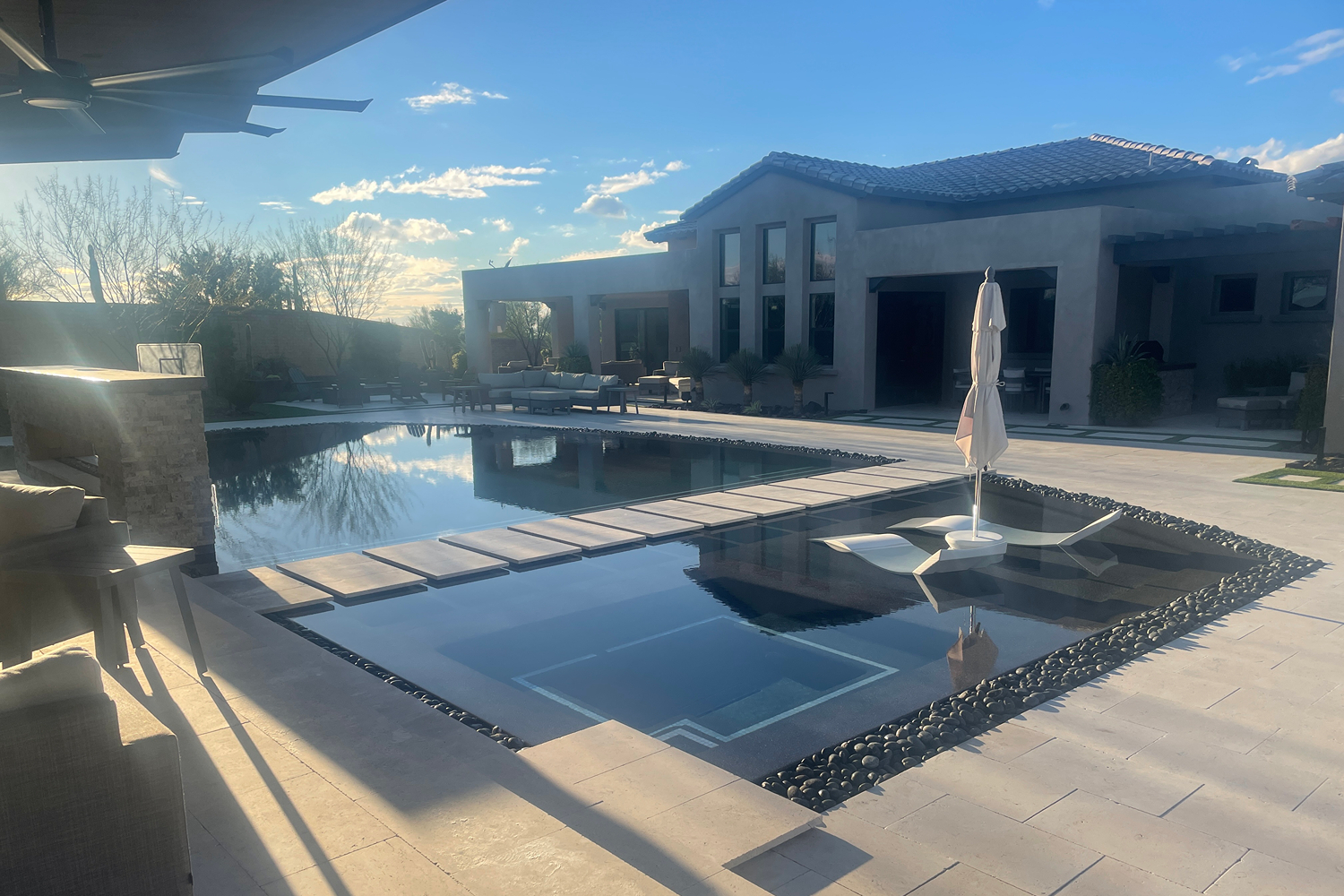
An infinity edge pool — also called a vanishing edge, negative edge, or zero-edge pool — is a pool designed so that one or more edges appear to have no boundary. Water spills continuously over the edge into a hidden catch basin below, creating the visual effect that the pool merges with the horizon, a view, or the landscape beyond.
The effect is achieved through precise engineering, not illusion. The “vanishing” edge is actually a wall built slightly lower than the pool’s water level, calculated to within fractions of an inch. Water flows over this edge at all times, collected in a catch basin, then recirculated by a separate pump system back into the pool. When executed correctly, the result is one of the most striking design statements in residential architecture.
Infinity edge pools are always concrete. The engineering they require — custom catch basin geometry, wall height calculations tied to the specific view line, site-specific hydraulics — cannot be pre-manufactured. Every infinity edge is a one-off structural project.
How Infinity Pools Actually Work
Most homeowners understand the visual effect but not the mechanics. Understanding how infinity pools work helps you make better decisions about siting, design, and maintenance.
The Overflow Edge
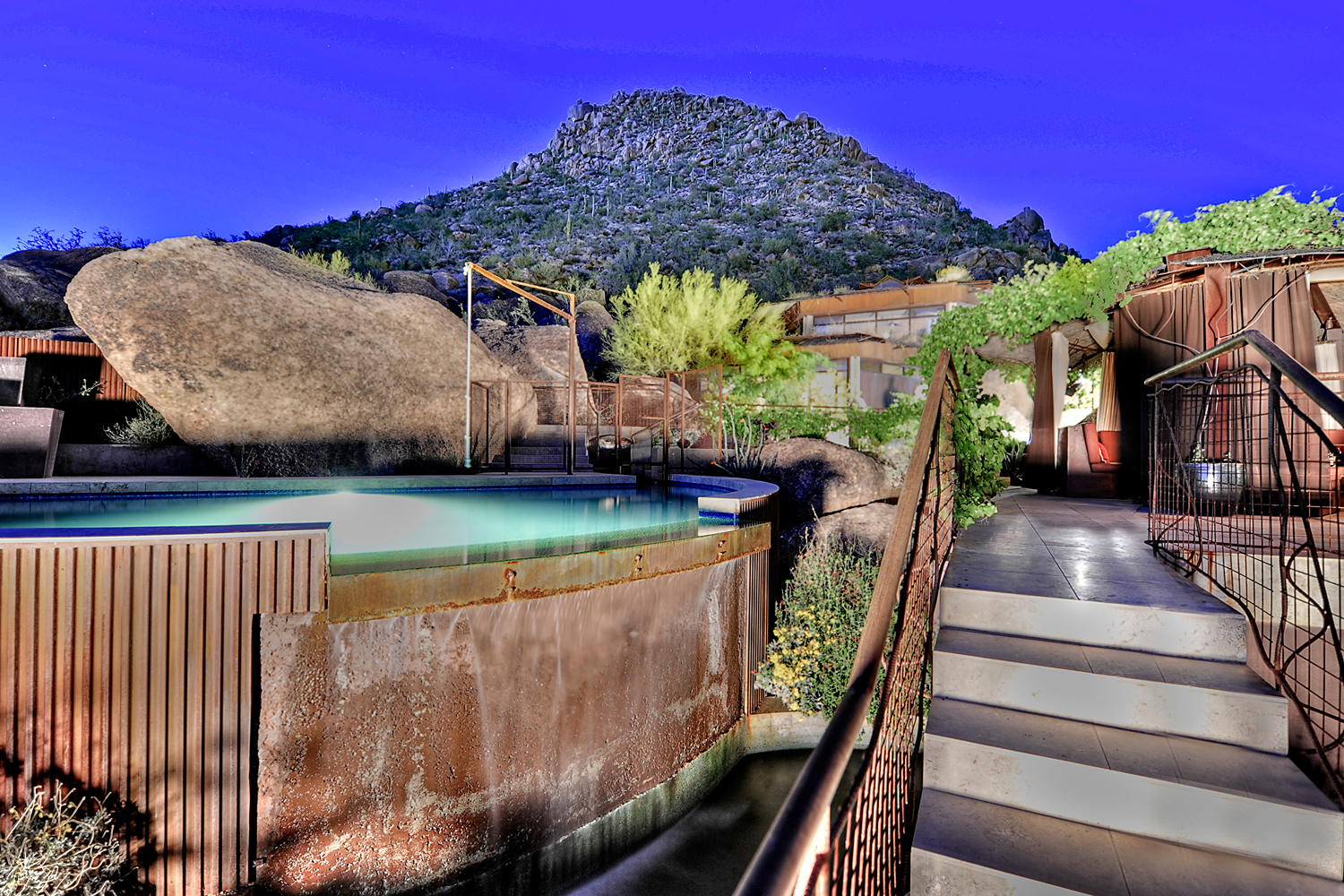
The vanishing edge is a precisely engineered wall. It is built approximately 1 to 2 inches lower than the water surface elevation you want to maintain in the pool. When the pool is running, water continuously flows over this edge, creating the sheet of water that produces the visual effect.
The height of this wall is calculated based on the view you want to frame. The geometry of the overflow edge determines the precise elevation where the water surface sits — and therefore what the eye sees from the pool and from the home.
The Catch Basin
Directly below the vanishing edge sits a catch basin: a separate concrete reservoir that collects the overflow water. The catch basin must be sized to hold the volume of water that the recirculation pump delivers while the pool is in operation. Undersizing the catch basin is one of the most common engineering errors in infinity pool construction.
A dedicated pump pulls water from the catch basin and returns it to the main pool body, typically through a series of inlets on the opposite end. This creates a continuous loop. The main pool’s filtration system handles water quality; the overflow pump handles the visual effect.
The Recirculation System
Infinity edge pools have two separate hydraulic systems: the main pool circulation and filtration system, and the overflow recirculation system. Both require proper pump sizing, plumbing, and automation. Most modern installations integrate both systems into a smart pool controller.
When the pool is turned off, water levels equalize — the visual effect disappears, but the pool is still functional. The effect is active only when the overflow pump is running.
Site Requirements: Does Your Property Qualify?
Not every property can accommodate an infinity edge pool, and this is the question to answer before falling in love with the design. Here is what the site needs to support.
Elevation Differential
An infinity edge requires a meaningful drop beyond the pool’s edge — the view side of the wall needs somewhere for the eye to go. The general minimum for the effect to work visually is a drop of at least 4 to 6 feet from the pool rim to the terrain below. Larger drops produce more dramatic results.
Properties on hillsides, elevated pads, or lots with natural grade changes are natural candidates. Flat lots present more challenges — the effect can still be achieved, but it requires either building the pool up on a raised structure or creating a retaining wall and landscaped drop below, which adds both cost and engineering complexity.
View Line
The infinity edge should be oriented to frame something: a mountain range, a city view, a golf course, a natural desert wash, or a designed landscape feature. The direction of the edge should be determined by the view you want to capture from inside the pool — specifically, from the water surface.
This orientation is set in design, before engineering begins. Getting this right requires standing on the site, understanding where the best views are at different times of day, and thinking about what you’ll see from both the pool and the home.
Soil and Structural Conditions
Infinity edge pools require a geotechnical study on most sites. The edge-side wall and catch basin are supporting significant hydraulic load, and the soil conditions beneath them must be adequately stable. Expansive soils, poorly compacted fill, and sites near drainage courses all require additional engineering attention.
Arizona’s geology is generally favorable — the Phoenix metro has predominantly sandy loam and decomposed granite soils that drain well and provide stable foundations. However, specific neighborhoods with known expansive soil conditions (some parts of the east valley, areas near the Salt River drainage) require closer evaluation.
Property Lines and Setbacks
In most Arizona jurisdictions, pools must maintain a minimum setback from property lines — typically 3 to 5 feet. The catch basin, which extends below and in front of the vanishing edge, also needs to fit within the setback. On properties where the best view is directly toward a property line, this setback requirement can constrain the design.
This is one of the conversations to have during the design phase, before plans are drawn.
Not Sure If Your Property Works for an Infinity Pool?
Jaylen and Jeff can evaluate your site during a design consultation. We’ve built infinity edges on properties most builders said couldn’t support it — and been honest about the ones that genuinely couldn’t.
The Engineering Behind the Effect
This is where infinity edge pools separate from every other pool type in terms of complexity. The engineering is not difficult if you’ve done it before. It is very difficult if you haven’t.
Overflow Wall Height Calculation
The overflow wall must be built to a specific elevation, calculated from the desired water surface height and the sight line geometry. This calculation accounts for:
- The horizontal distance from the overflow edge to the catch basin
- The angle of view from inside the pool
- The height of the overflow sheet at full flow
- The hydraulic head created by the pump system
A wall that is 1 inch too high eliminates the effect. A wall that is 1 inch too low creates hydraulic imbalance and a catch basin that overfills at peak flow. This tolerance is tighter than most homeowners realize.
Catch Basin Sizing
The catch basin must hold a volume of water equal to the surge flow from the overflow pump plus a safety margin. During startup, when the pool is being filled, significant water moves from pool to catch basin before the overflow pump activates. A properly sized catch basin prevents overflow events that can damage the adjacent structure or landscaping.
The catch basin is typically 500 to 1,500 gallons depending on the size of the pool and the flow rate of the overflow pump. It is built directly beneath the overflow edge and is integrated into the same concrete structure.
Structural Load at the Edge
The vanishing edge wall, the catch basin, and the pool shell at the edge side are all in contact with significant water volume and hydrostatic pressure. The reinforcement, wall thickness, and footer design at this location must handle loads that the non-edge sides of the pool don’t experience.
Arizona’s frost conditions are minimal compared to northern climates, which is an advantage — freeze-thaw cycles are not a significant structural concern. But the thermal expansion from 300+ days of sun and the hydraulic cycling of the overflow system create their own structural demands.
Automation and Controls
A modern infinity edge pool integrates the overflow pump, main circulation, heating, lighting, and any water features into a unified smart controller. Getting the pump timing right — so the catch basin doesn’t run dry or overflow during startup and shutdown sequences — requires programming that’s specific to your pool’s hydraulics.
Mossman Pools uses Pentair automation systems, which handle multi-pump configurations reliably and allow remote monitoring and control.
Design Possibilities Beyond the Basic Infinity Edge
An infinity edge is a structural feature, not a design style. Once the engineering is solved, the design possibilities are wide.
Two-Sided and Three-Sided Infinity Edges
Most infinity pools have one vanishing edge. Properties with exceptional views in two directions can accommodate two-sided or even three-sided designs, though the hydraulic complexity increases significantly. These designs typically require a larger catch basin and more sophisticated overflow pump systems.
Infinity Edge Combined with a Raised Spa
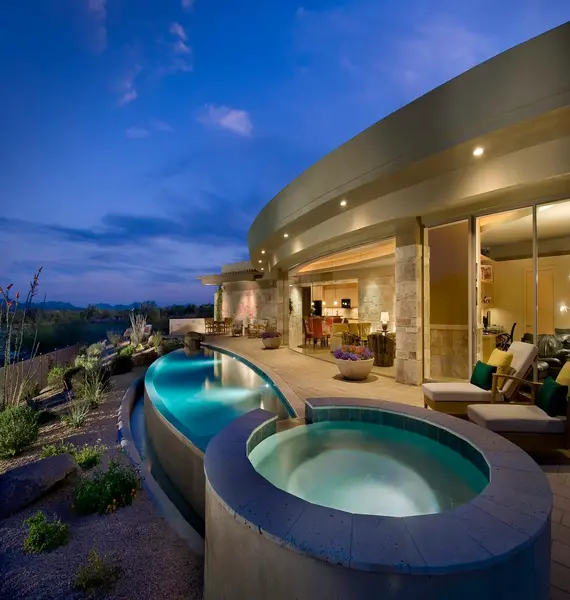
One of the most popular luxury configurations in the Scottsdale market combines an infinity edge at the far end of the pool with a raised spa at the near end — so the visual line of sight from the spa looks over the pool and out to the view. The spa spills into the pool, the pool spills over the infinity edge. Two waterfall effects, one continuous composition.
Infinity Edge with Fire Features
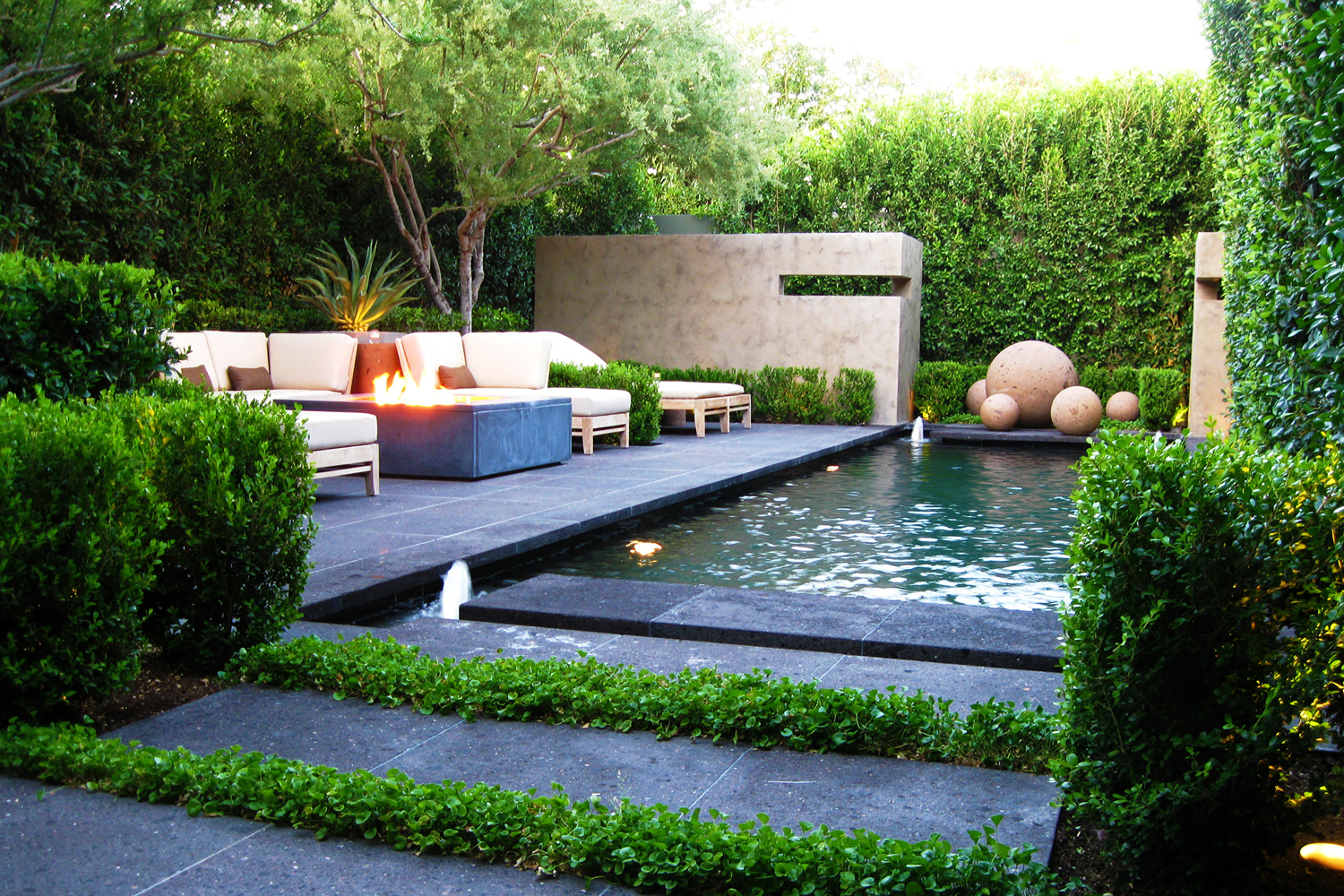
Fire features — typically fire bowls or linear fire and water walls — placed at or near the infinity edge dramatically amplify the visual impact, particularly at night. The combination of a lit pool, a sheet of water over the vanishing edge, and fire in the same frame is one of the signature aesthetic statements of Scottsdale luxury pools.
Wet-Edge vs. Dry-Edge Catch Basin
The catch basin can be designed as a wet edge — always holding water when the system is running, with a visible reflection pool below the vanishing edge — or as a dry edge, where the catch basin is designed to not be visible from the home. The wet-edge design is more dramatic and more common in luxury builds. The dry-edge design is cleaner architecturally but requires careful landscaping to integrate the basin into the yard.
Mossman Has Built Every Variation of This Pool
Eleven World’s Greatest Pools awards. Thirty-three years of custom builds. If you can imagine it, there’s a good chance we’ve built something like it — and can tell you exactly what it takes.

Arizona-Specific Advantages
Scottsdale and the broader Phoenix metro offer conditions that make infinity edge pools exceptionally compelling.
The Topography
The Phoenix metro is ringed by mountain ranges — the McDowell Mountains, the Superstitions, the White Tank Mountains, South Mountain — and interrupted by elevated ridgelines throughout Paradise Valley, North Scottsdale, Cave Creek, and the Arcadia neighborhood. Hillside lots in these areas provide natural elevation differentials that create ideal infinity pool sites without artificial grading.
DC Ranch, Silverleaf, and the gated communities along the edges of the McDowell Mountains were developed specifically around this topography. Many lots there are designed for exactly this kind of build.
The Views
Arizona’s wide-open skies and the spatial scale of the desert create views that few urban markets can match. A Scottsdale infinity pool can frame a view that stretches 30 miles. At sunset and during monsoon season, the sky itself becomes part of the design.
The Year-Round Swim Season
Arizona’s climate means an infinity pool is a 9 to 10-month feature, not a summer luxury. The visual effect is in play nearly every day of the year, making the premium cost of the engineering worthwhile in a way it might not be in a market with a 3-month swim season.
The Outdoor Living Culture
High-end Scottsdale properties are built around outdoor living. The pool is the centerpiece of the backyard, not an afterthought. An infinity edge pool in this context anchors a complete outdoor environment — outdoor kitchen, fire features, landscaping, lighting — and the investment reads differently than it would in a market where people live indoors most of the year.
The Building Process: What to Expect
Building an infinity edge pool is more involved than a standard custom pool. Here is a realistic sequence of what the process looks like with an experienced builder.
Design consultation. The process starts with a site evaluation, a conversation about the view you want to frame, and an early sketch of the pool’s orientation. This is where the edge direction is set.
Design development. The design team produces a site plan, elevations, and a 3D rendering that shows the view line from inside the pool. This is the point to refine the shape, features, and materials before engineering begins.
Engineering. A structural engineer reviews the site, the soils report if required, and the pool design. Catch basin sizing, wall reinforcement, and overflow calculations are produced. This takes 2 to 4 weeks.
Permitting. Plans are submitted to the city. In Scottsdale and most Phoenix metro municipalities, pool permits for complex projects take 4 to 6 weeks for review. HOA or ARC approval, if required, runs concurrently.
Construction. Excavation, steel, gunite, catch basin construction, plumbing, and equipment installation. Infinity edge pools take longer than standard pools — expect 4 to 6 months for a complete build, plus finishing time.
Startup and calibration. The overflow system is calibrated to the pool’s hydraulics. Pump timing, water level settings, and automation programming are all set during this phase. An experienced crew will run the system through several cycles before handing the pool over.
Cost and Timeline
Infinity edge pools carry a meaningful premium over standard custom pools. The catch basin adds structural volume. The overflow system adds equipment. The engineering adds time and professional fees. And the precision required throughout — from wall height calculations to pump calibration — demands experienced crews.
As a rough frame, an infinity edge pool typically costs 20 to 40 percent more than a comparable non-edge pool of the same footprint. The range is wide because it depends heavily on site conditions (a natural hillside site needs less work than a flat lot requiring a raised structure) and on the complexity of the features surrounding the edge.
Mossman Pools does not publish pricing online because no two projects are alike. For an accurate estimate, the conversation starts with your site.
Timeline from consultation to swim-ready: 6 to 10 months for most projects. Planning for a summer swim season means starting the design conversation in fall or early winter.
Ready to Talk Through Your Infinity Pool Project?
Jeff and Jaylen have built more infinity edge pools than most Arizona builders have seen. The first conversation is free, and it will give you a realistic picture of what your property can do.
Schedule a Design Consultation
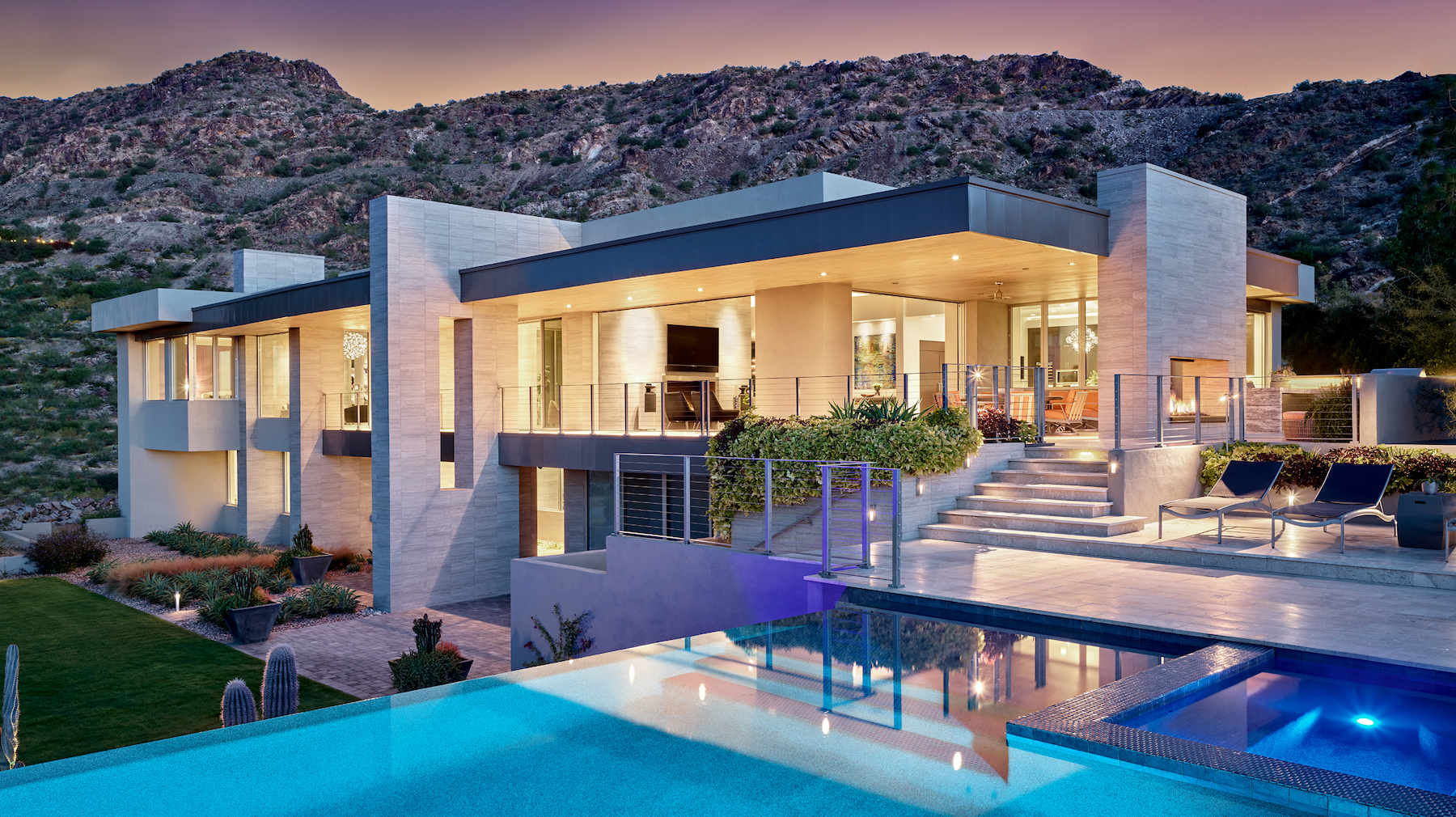
Mossman’s Infinity Edge Portfolio
Mossman Pools has been building infinity edge pools in the Phoenix metro for more than three decades. Our infinity builds have appeared in Phoenix Home and Garden, LUXE, and Phoenix Magazine, and have contributed to 11 World’s Greatest Pools awards.
We have built infinity edges on natural hillside lots in Paradise Valley and DC Ranch, on engineered raised structures in flat neighborhoods, and on properties that other builders told clients couldn’t support the design. The difference between a builder who has done this 50 times and one who has done it twice is not in their confidence — it’s in the details they know to look for before the shovel hits the ground.
Jeff Mossman’s background in design means our infinity edges are engineered and designed in the same conversation. The structural requirements and the visual effect are solved together, not sequentially.
Common Mistakes and How to Avoid Them
For homeowners evaluating builders, these are the most common infinity pool mistakes — and what to ask to avoid them.
Undersized catch basin. A catch basin that runs dry during startup or overflows during shutdown isn’t just inconvenient — it can damage the structure and the landscaping. Ask your builder how they calculate catch basin volume, and what safety margin they build in.
Incorrect wall height. If the overflow wall is built even slightly too high or too low, the effect is compromised. Ask what tolerance the builder works to, and whether the height is set by calculation or by eye.
Inadequate structural reinforcement at the edge. The edge wall is under more stress than any other part of the pool structure. Ask about wall thickness, rebar spacing, and footer design at the overflow wall specifically.
Wrong site orientation. The view from inside the pool — especially from the water surface — is different from the view from the deck. Ask to see renderings from water surface level, not just from standing height.
Inexperienced automation setup. The pump timing and water level settings require calibration. Ask how the builder handles startup and what the process is for adjusting the system after the pool is running.
Frequently Asked Questions
Q: What is the difference between an infinity pool, a vanishing edge pool, and a negative edge pool? A: These terms describe the same feature. “Infinity edge,” “vanishing edge,” and “negative edge” are all used interchangeably in the industry to describe a pool where water flows continuously over one or more edges into a catch basin below, creating the visual effect of an edge-less pool.
Q: Can you build an infinity pool on a flat lot? A: Yes, but it requires a different approach. On flat lots, the pool is often built on a raised structure — essentially a platform — so the infinity edge looks out over a designed landscape drop. This adds cost and structural complexity. The effect can be equally dramatic, but the site engineering is more involved than on a naturally sloped lot.
Q: Does an infinity pool require more maintenance? A: Infinity edge pools have two pump systems instead of one, which adds a small amount of maintenance complexity. The catch basin should be checked periodically for debris accumulation. Otherwise, the day-to-day maintenance is similar to any concrete pool of the same size.
Q: How much does an infinity pool cost in Arizona? A: Infinity edge pools typically cost 20 to 40 percent more than a standard custom pool of the same footprint, because of the additional engineering, the catch basin, and the overflow pump system. Mossman Pools doesn’t publish pricing online because every site and design is different — the best way to get an accurate estimate is through a design consultation.
Q: Can an infinity pool face any direction? A: The edge can face any direction, but the design should be oriented toward your best view. In North Scottsdale and Paradise Valley, east-facing edges often frame mountain views. West-facing edges capture sunset views. South-facing edges can be effective where the terrain drops. The right orientation depends on your specific site.
Q: How long does it take to build an infinity edge pool? A: From design consultation to swim-ready, expect 6 to 10 months for most infinity edge pool projects. Engineering and permitting add time beyond a standard pool build, and the construction itself requires more precision, which takes longer.
Q: Does my property need a geotechnical study for an infinity pool? A: Most sites with significant slope changes or unknown soil conditions benefit from a geotechnical study before engineering begins. Your builder and structural engineer will advise whether one is needed based on the site’s soil type, drainage, and the scope of the project.
Start Your Infinity Pool Design
An infinity edge pool is one of the most technically and visually demanding projects in residential construction. Getting it right requires a builder who has done it many times and understands both the engineering and the design in the same conversation.
Mossman Pools has been building these pools in Scottsdale and the Phoenix metro since before most of our competitors were established. If you are thinking about an infinity pool on your property, the right starting point is a conversation with our team.
Let’s Evaluate Your Property and Start the Design Conversation
No pressure. No commitment. Just Jeff or Jaylen, your site, and an honest assessment of what’s possible and what it takes.